A Simple Framework for Complex Times
If you search for “budgeting,” the first thing you’ll see is the 50/30/20 rule. It’s the “Old Reliable” of personal finance. But with the cost of living shifts we’ve seen recently, does it still work?
The Breakdown
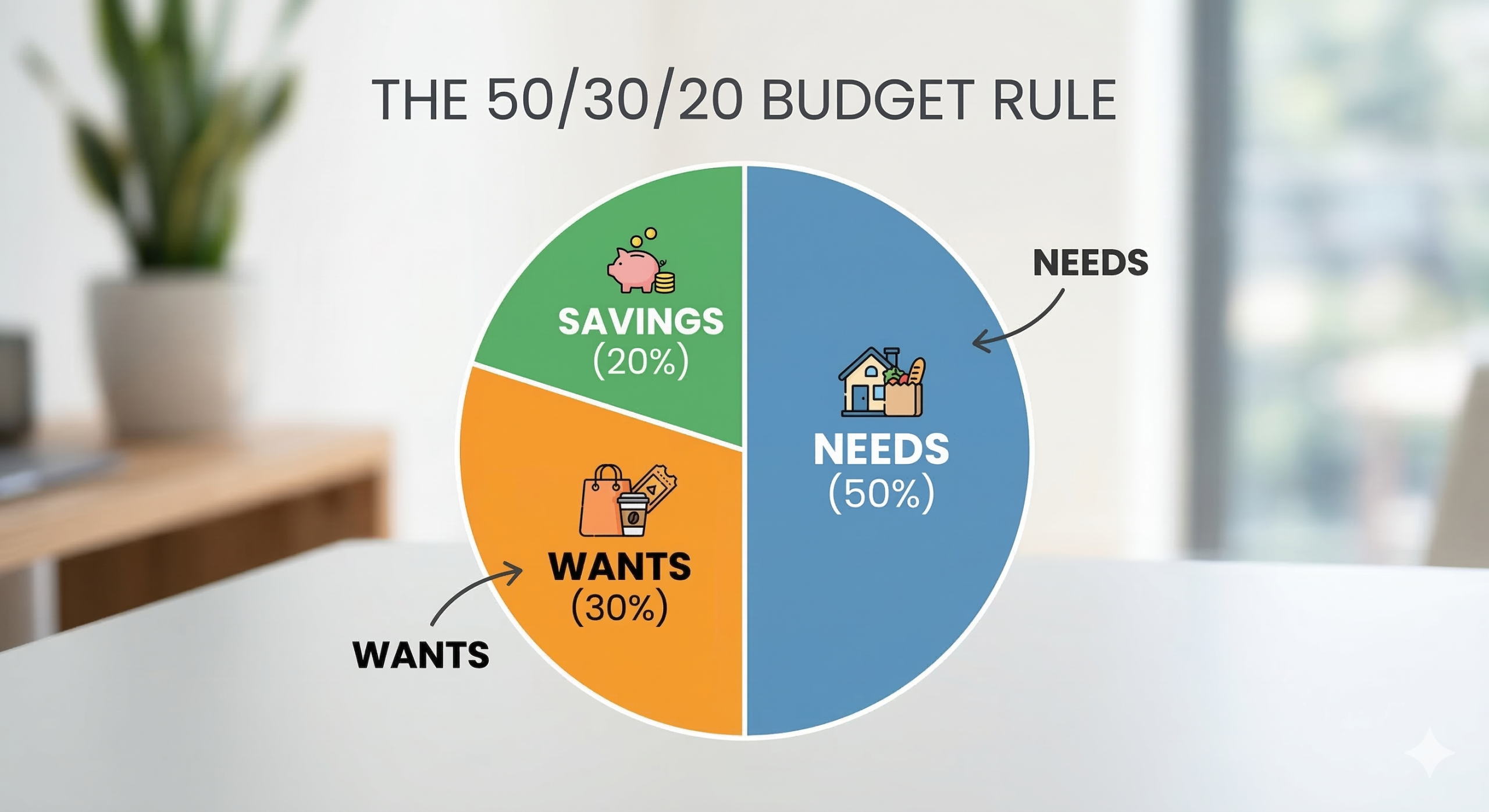
The rule suggests splitting your after-tax income into three distinct buckets:
- 50% for Needs: Rent, groceries, utilities, and insurance.
- 30% for Wants: That weekend trip, dining out, and your “must-have” streaming services.
- 20% for Savings and Debt Repayment: Building your emergency fund and paying off the “bad” debt.
Adjusting for Today’s Reality
Let’s be honest: in many cities, rent alone might eat 40% of your income. If your “Needs” bucket is overflowing, you have to be ruthless with your “Wants.” In 2026, many experts suggest a “Flex Budget” approach where you prioritize the 20% savings first (paying yourself first) and then let the needs and wants fight for the rest.
Why It Works
The beauty of this system is its simplicity. You don’t need a PhD in Excel to do the math:
$$Income_{Net} = 0.50(Needs) + 0.30(Wants) + 0.20(Savings)$$
Take Action: This weekend, look at your last three bank statements. Which bucket is leaking?